
Create a Wallet
Understand creation and import before generating new credentials.
Open guide →A multi-chain wallet, blockchain network and Web3 knowledge hub from imtoken
Use imtoken to understand multi-chain asset organization, network selection, receiving and sending, transaction history, DApp connections and approvals. The surrounding knowledge center explains how networks, gas, signatures, smart contracts and wallet security fit together so every action can be reviewed before it is approved.
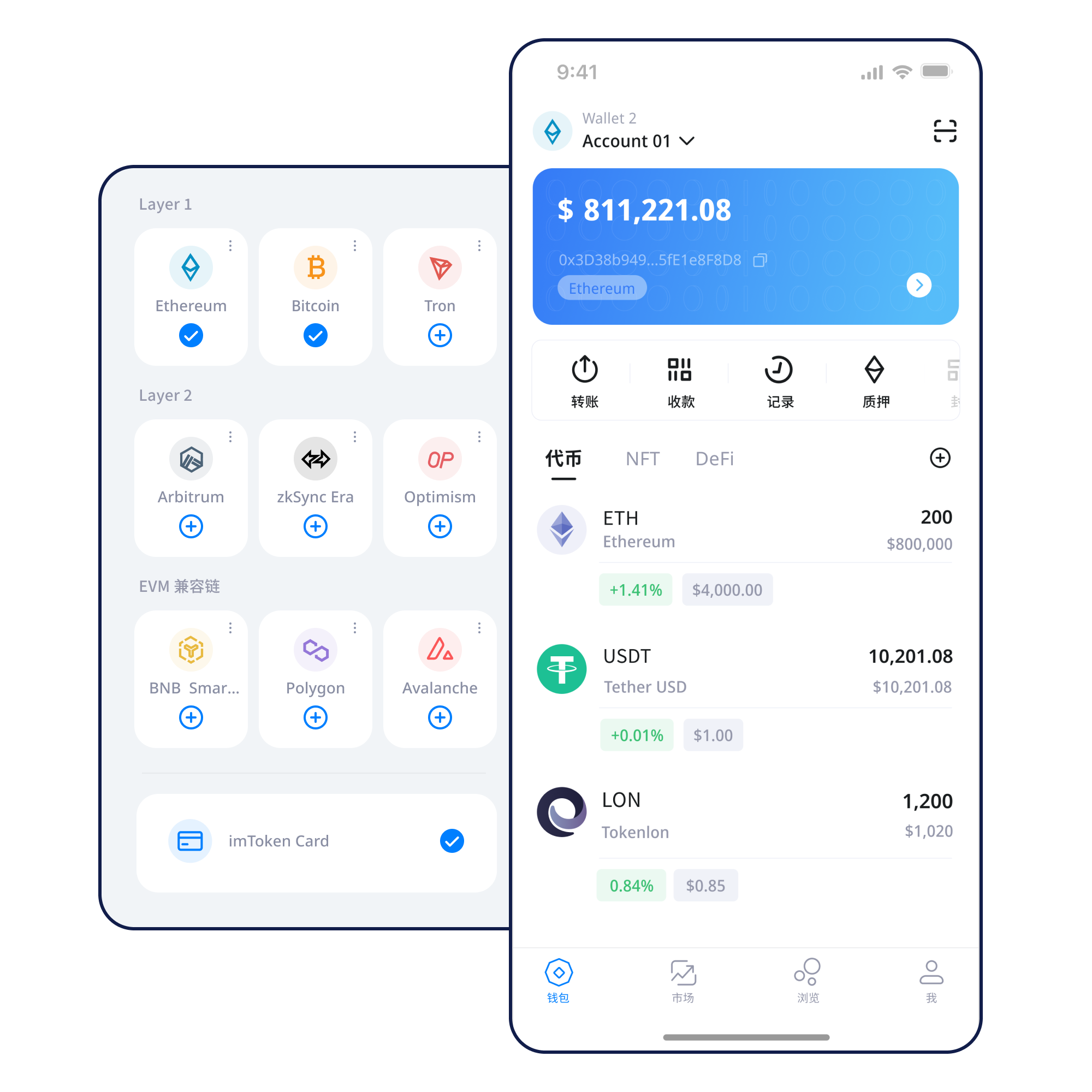
Understand creation and import before generating new credentials.
Open guide →Keep seed phrases offline and never send them to another person.
Open guide →Match the receiving address with the network and asset.
Open guide →Review the address, network, amount and gas before signing.
Open guide →Verify the domain and inspect every signature or approval independently.
Open guide →A wallet is not only a balance screen. It is where you choose networks, review addresses, inspect transaction details and decide whether a DApp request should be signed or approved.
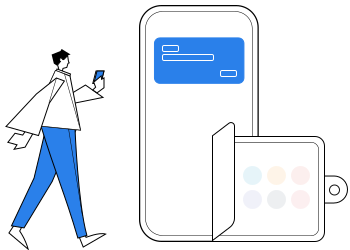
Separate assets by network, confirm native gas assets and read confirmation state.
Review receiving addresses, networks, amounts, gas and transaction hashes.
Mobile access to network management, asset views, transaction history and DApp use.
Browser connections require the same care with domains, approvals and disconnection.
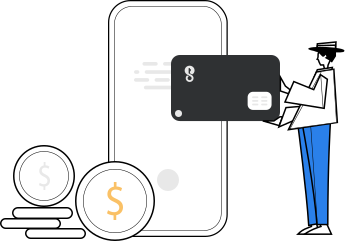
Keep seed phrases and private keys under your own control; review every approval.
Network choice changes where the transaction is sent, which native asset pays gas, how confirmations are observed and how a bridge or Layer 2 transfer should be interpreted.
Different chains can use similar address formats while maintaining separate transaction histories and gas assets. Always confirm the active network before sending.
Read the guide →Different chains can use similar address formats while maintaining separate transaction histories and gas assets. Always confirm the active network before sending.
Read the guide →
Different chains can use similar address formats while maintaining separate transaction histories and gas assets. Always confirm the active network before sending.
Read the guide →
Different chains can use similar address formats while maintaining separate transaction histories and gas assets. Always confirm the active network before sending.
Read the guide →
Different chains can use similar address formats while maintaining separate transaction histories and gas assets. Always confirm the active network before sending.
Read the guide →The path emphasizes offline backup, network and address checks, reading DApp requests, and periodic approval review.
In real use, get imtoken often appears together with gas, confirmations, transaction hashes or contract permissions. A safer sequence is to identify the target first, read the request second, and only then sign or broadcast. A website that asks for a seed phrase, private key or verification code should not be trusted as part of a normal wallet action.
If the result does not match your expectation, avoid repeating the same action immediately. Save the transaction hash and inspect it on a block explorer for the correct network to see whether it was broadcast, succeeded and reached confirmation. On-chain transactions are usually not something a wallet can unilaterally reverse, so checks before action matter more than recovery promises after the fact.
For Usage path, it is useful to distinguish the wallet, the blockchain network and any third-party DApp. A contract can introduce code, permission and operational risks. imtoken staff will never ask for a seed phrase or private key and should not be treated as an entity that can recover those credentials for the user.
Long-term habits are more useful than memorizing a button. For choose and verify the network, consistently review the address, network, amount or requested permission, and check whether old connections or approvals are still needed. Shared computers, remote-control sessions and untrusted network environments deserve extra caution.
The purpose of this material is not to promise returns or absolute safety. It is to make each on-chain action easier to reason about. Signing, approving, bridging or using validator-related services can involve network conditions, contract risk, waiting periods and market volatility, so participation should always be an independent decision.
When thinking about review transactions and approvals, separate the network, address, signature and transaction state. A wallet interface helps organize information, but the authoritative asset state is recorded by the relevant blockchain. Before acting, confirm that the selected network matches the asset and destination, and do not rely on names or icons alone to identify a token.
Connecting a wallet does not mean every later request should be accepted. Treat each signature and approval as a separate decision.
Open Web3 guide →In real use, visit the dapp often appears together with gas, confirmations, transaction hashes or contract permissions. A safer sequence is to identify the target first, read the request second, and only then sign or broadcast. A website that asks for a seed phrase, private key or verification code should not be trusted as part of a normal wallet action.
In real use, verify the domain often appears together with gas, confirmations, transaction hashes or contract permissions. A safer sequence is to identify the target first, read the request second, and only then sign or broadcast. A website that asks for a seed phrase, private key or verification code should not be trusted as part of a normal wallet action.
In real use, start connection often appears together with gas, confirmations, transaction hashes or contract permissions. A safer sequence is to identify the target first, read the request second, and only then sign or broadcast. A website that asks for a seed phrase, private key or verification code should not be trusted as part of a normal wallet action.
In real use, review account request often appears together with gas, confirmations, transaction hashes or contract permissions. A safer sequence is to identify the target first, read the request second, and only then sign or broadcast. A website that asks for a seed phrase, private key or verification code should not be trusted as part of a normal wallet action.
In real use, inspect signature or approval often appears together with gas, confirmations, transaction hashes or contract permissions. A safer sequence is to identify the target first, read the request second, and only then sign or broadcast. A website that asks for a seed phrase, private key or verification code should not be trusted as part of a normal wallet action.
In real use, complete the action often appears together with gas, confirmations, transaction hashes or contract permissions. A safer sequence is to identify the target first, read the request second, and only then sign or broadcast. A website that asks for a seed phrase, private key or verification code should not be trusted as part of a normal wallet action.
In real use, disconnect when no longer needed often appears together with gas, confirmations, transaction hashes or contract permissions. A safer sequence is to identify the target first, read the request second, and only then sign or broadcast. A website that asks for a seed phrase, private key or verification code should not be trusted as part of a normal wallet action.
Seed phrases and private keys are controlled by the user. imtoken staff will not ask for them. Avoid cloud screenshots, fake support, suspicious airdrops, remote-control requests and unreviewed approvals. Before a transfer, verify the address, network and amount. Remember that blockchain transactions are usually not reversible by the wallet provider, and third-party DApps and smart contracts can introduce additional risk.
Open Security Center →Before the first transfer, learn what an address represents, why the seed phrase and private key matter, how networks and gas affect transactions, what a transaction hash can prove, and why DApp signatures and approvals need their own checks.
Start the guide →Staking content focuses on PoS, validators, reward sources, network state, withdrawals, exits, waiting periods, penalties and smart-contract risk without presenting fixed returns.
Validator rewards depend on protocol conditions and participation; they can change. Exit and withdrawal can involve waiting, and validators can be penalized by the network.
Read basics →Smart-contract risk, third-party service risk and digital-asset price volatility remain relevant. Staking does not guarantee returns.
Learn about validators →No. imtoken staff will not ask for your seed phrase, private key or verification code. Keep them under your own control.
Networks are separate ledgers. A matching-looking address does not mean the destination or asset route is correct.
Gas is the execution fee mechanism used by many networks. It is usually paid in the network’s native asset and can vary with demand.
It identifies a transaction on a specific network and can be used to inspect broadcast, execution and confirmation status on a block explorer.
No. Every signature and token approval should be reviewed separately.
No. Rewards can change, exits can involve waiting, validators can face penalties, and market and contract risks remain.
Use the download entry only when you are ready, and keep your credentials under your own control.
Download imtoken